

Rib Cage Injury and Pain.
A typical human rib cage consists of 24 ribs, 12 on each side, the sternum (chest bone), costal cartilages and 12 thoracic vertebrae. As part of the bony thorax the ribs protect the internal thoracic organs such as the heart and lungs. The ribs also have a role in breathing and move to allow the rib cage to move to allow the lungs to inflate.
There are 7 true ribs, the ones that have an attachment to the chest bone as well as the thoracic vertebrae and 5 false ribs of which the upper 3 attach to the sternum via the costal cartilages of the ribs above and the lower 2 which are floating ribs and only attach to the vertebrae.
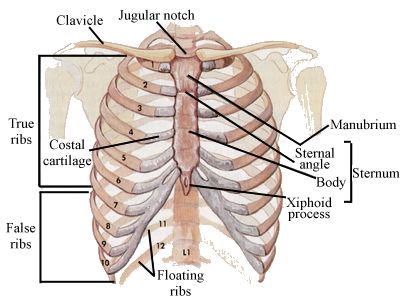
The human rib cage is a component of the human respiratory system. A breath in is accomplished when the muscular diaphragm, at the base of the thoracic cavity, contracts and flattens, while contraction of intercostal muscles lift the rib cage up and out.
Rib cage pain may be following an injury or without any explanation and can be due to anything from a pulled muscle to a fracture. It may also be a sign of an underlying medical condition and if this is suspected a visit to the GP would be appropriate. The pain may be sharp, dull or achy and may be felt anywhere along the ribs.
Causes of pain in the rib area can include muscle spasms, injuries to the chest including rib fractures, diseases that affect the bone such as osteoporosis, inflamed rib cartilage,
The treatment will depend on the cause of pain in the thoracic area but if it is musculoskeletal in origin physiotherapy may be of great benefit. The physiotherapist will possibly mobilise joints as well as doing some massage and advising on home exercises. If the pain is due to a minor injury you can apply an ice pack to the area and take over the counter painkillers.
If you suspect a broken rib it is important to try to keep breathing as normal as possible to prevent any chest infection and often holding a pillow to the painful area when coughing will ease the pain.
It is advisable to avoid lifting and carrying heavy objects to avoid causing further damage.
If you have any of the below it is recommended that you urgently see a doctor:
- Increasing shortness of breath
- Increasing chest pain
- Pain in your tummy or shoulder
- Coughing up blood or yellow or green mucus
- A high fever.
The above symptoms may indicate a chest infection or may mean a broken rib has damaged your lung, causing the lung to collapse or injuring another organ, such as the liver or spleen.
Source:
thesebonesofmine.wordpress.com